


Views: 0 Author: Site Editor Publish Time: 2026-03-16 Origin: Site


Choosing the right frying equipment is one of the most practical decisions a restaurant owner can make. Fried foods are often among the most profitable menu items in foodservice, but profits depend heavily on speed, consistency, oil control, and equipment reliability. That is why many buyers ask the same question: How to choose the best commercial electric fryer for your restaurant. The answer goes far beyond selecting the biggest machine or the lowest price. A suitable commercial electric fryer should match your menu, your kitchen layout, your service volume, your staff workflow, and your long-term operating costs. Whether you run a small café, a fast-casual outlet, a hotel kitchen, or a busy full-service restaurant, the fryer you choose can directly influence food quality, customer waiting time, labor efficiency, and maintenance expenses. In today’s competitive foodservice market, purchasing the right fryer is not just an equipment decision. It is part of building a more stable and efficient kitchen operation.
Many restaurant buyers are attracted by visible features such as stainless steel construction or a large oil tank, but the most important factors are often the ones that affect daily performance. Recovery time, temperature accuracy, ease of cleaning, basket design, oil filtration, safety functions, and energy consumption all matter in real kitchen use. A fryer that looks affordable at first may create hidden costs later through slow output, poor frying consistency, or difficult maintenance. By contrast, a well-chosen electric fryer can improve throughput, simplify staff operation, and support better control over product quality. In this guide, we will explain how to evaluate commercial electric fryers step by step, what specifications deserve the closest attention, and how restaurant operators can choose equipment that delivers better long-term value.
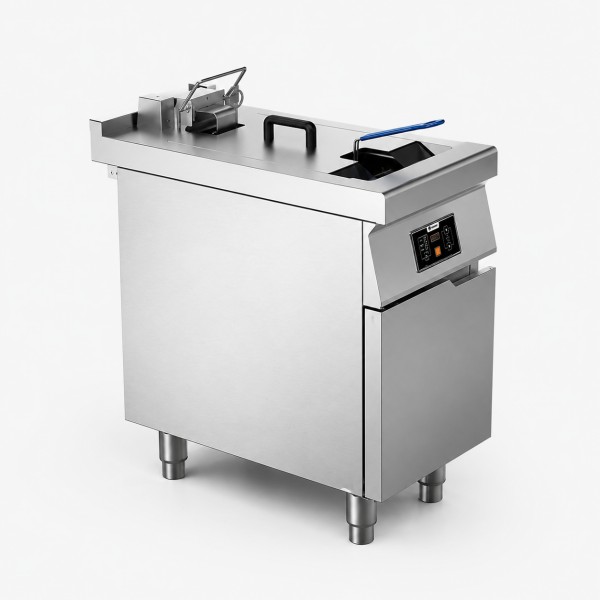
In a restaurant kitchen, the fryer is often one of the busiest pieces of equipment. It may be used for fries, chicken, seafood, snacks, appetizers, or specialty menu items throughout the day. When the fryer cannot keep up with demand, the whole kitchen slows down.
A well-matched fryer can help with:
· Faster order turnaround
· More consistent product texture and color
· Better oil efficiency
· Lower labor pressure during peak periods
· Reduced downtime from cleaning or maintenance
This is especially important in operations where fried food is a major revenue driver. If your restaurant depends on popular fried items, fryer performance is not secondary equipment performance. It is core production performance.
Before comparing brands or technical details, restaurant buyers should first look at their own menu. The best commercial electric fryer for one business may be completely wrong for another.
· What products will be fried most often?
· How many portions are served during peak hours?
· Are you frying light items, breaded items, frozen products, or mixed menu categories?
· Will the fryer be used continuously or occasionally?
· Do you need separate frying zones for different foods?
A small dessert shop selling only fries and snacks may need a very different fryer from a busy fried chicken restaurant or a hotel buffet kitchen. The menu determines not only capacity needs but also filtration requirements, temperature recovery expectations, and cleaning frequency.
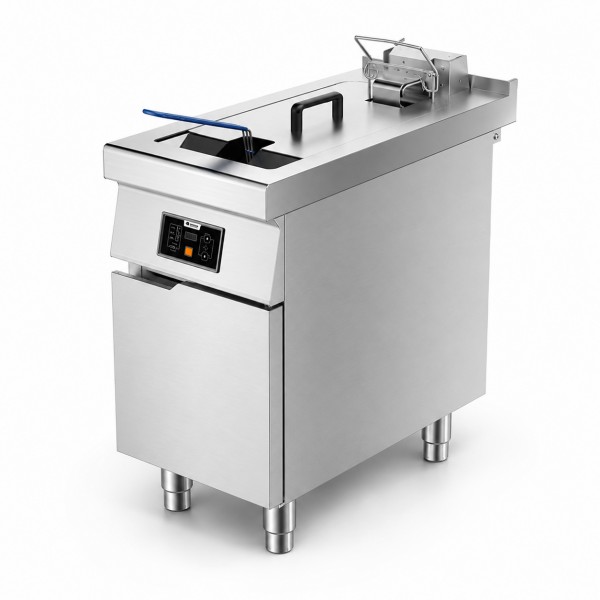
Commercial electric fryers are not all built for the same purpose. Knowing the common equipment categories can make selection much easier.
These are compact units designed for lower-volume operations or kitchens with limited space. They are often used in cafés, snack bars, food stalls, and smaller restaurants.
Typical advantages include:
· Space-saving design
· Lower initial investment
· Suitable for lighter production
· Easy to place in flexible kitchen layouts
However, they may not be ideal for restaurants with heavy all-day frying demand.
These are larger units intended for medium to high-volume use. They usually offer bigger oil capacity, stronger output capability, and more durable daily performance.
They are often selected by:
· Fast food restaurants
· Casual dining operators
· Hotel kitchens
· Institutional foodservice
· Central kitchens with steady volume
Once the fryer type is clear, the next step is comparing performance specifications. These technical details affect real daily use much more than appearance alone.
Feature | What to Check | Why It Matters |
Tank Capacity | Oil volume and food output | Determines batch size and production ability |
Power Rating | Heating power in kW | Affects heating speed and recovery time |
Temperature Control | Range and control precision | Supports consistent food quality |
Basket Quantity | Single or multiple baskets | Improves workflow and product separation |
Construction Material | Food-grade stainless steel | Impacts durability and hygiene |
Drainage Design | Easy oil release and cleaning | Reduces labor and downtime |
Safety Protection | Overheat protection and stable controls | Improves operator safety |
Filtration Options | Built-in or external compatibility | Helps extend oil life |
This table can help restaurant owners compare models more objectively instead of focusing only on price or size.
One of the most common buying mistakes is choosing fryer capacity based on average sales instead of rush-hour production. Restaurant equipment must be able to perform when demand is highest, not only when the kitchen is quiet.
For smaller restaurants or snack counters, a compact or medium fryer may be enough if frying is limited to a few menu items.
Restaurants with steady lunch and dinner rushes usually need stronger production support. In these cases, basket size, tank depth, and recovery time become more important.
Busy fast-food stores, chains, and delivery-focused restaurants often need larger floor models or multiple fryer stations. The goal is to maintain output without long waiting times or temperature drops between batches.
If the fryer is too small, staff may overload the basket. That usually leads to longer cook times, lower food quality, and excessive oil stress.
Many buyers focus on oil capacity but underestimate the importance of recovery time. Recovery time is how quickly the fryer returns to the target temperature after a batch of cold or frozen food is added.
This directly affects:
· Crispness
· Color consistency
· Cooking speed
· Oil absorption
· Product repeatability
A fryer with poor recovery performance may produce greasy fries, uneven chicken coating, or inconsistent output across service periods. In a restaurant environment, stable temperature control is one of the foundations of reliable food quality.
Commercial electric fryers are often appreciated for precise temperature control and stable heating performance. In many kitchens, this supports more repeatable frying results, especially for operators who prioritize consistency.
For restaurants with a standardized menu, this can be a major advantage.
When people ask how to choose the best commercial electric fryer for your restaurant, we believe the answer should always begin with the real needs of the kitchen. There is no single fryer that suits every restaurant equally well. The best choice depends on menu structure, service pace, expected output, staff habits, cleaning requirements, and long-term cost priorities. In our experience, buyers get better results when they focus on operational fit rather than headline specifications alone. A fryer should not only heat oil effectively. It should support the rhythm of the kitchen, maintain product consistency under pressure, and remain practical to clean and manage every day. That is what turns a piece of equipment into a dependable part of restaurant production.
At Shenzhen Mantru.E Commercial Equipment Manufacturing Co., Ltd., we see commercial frying equipment as part of a broader kitchen efficiency system rather than an isolated machine purchase. From our perspective as a manufacturer, a good equipment decision is one that helps restaurants operate more smoothly, produce more consistent food, and reduce avoidable long-term costs. Buyers who want to understand more about fryer configuration, capacity selection, and commercial kitchen equipment planning can learn more from Shenzhen Mantru.E Commercial Equipment Manufacturing Co., Ltd. and evaluate which solutions best suit their restaurant model. We always believe that the most valuable recommendation is not the loudest one, but the one that genuinely fits the customer’s operation.
The best size depends on your peak-hour output, menu type, and kitchen space. Small restaurants often choose compact or medium-capacity models, but the right choice should still match actual demand.
Recovery time affects how quickly the fryer returns to the target temperature after food is added. Faster recovery supports better food texture, shorter waiting times, and more consistent quality.
A multi-tank fryer is often better when a restaurant fries different food categories and wants better flavor separation, workflow control, or cleaning management. A single-tank unit may be enough for simpler menus.
Restaurants should compare power rating, oil capacity, cleaning design, safety features, maintenance convenience, temperature stability, and long-term operating cost instead of looking only at purchase price.


