


Views: 0 Author: Site Editor Publish Time: 2026-03-19 Origin: Site


In today’s foodservice industry, speed, consistency, and kitchen efficiency are more important than ever. Restaurants, hotels, cafés, quick-service chains, catering companies, and institutional kitchens all need equipment that can keep up with busy service hours while maintaining food quality. This is exactly why more operators are paying attention to the benefits of using an electric fryer in a commercial kitchen. For many businesses, especially those handling high-volume fried foods, an electric fryer offers a practical balance of precise temperature control, reliable output, easier installation, and day-to-day convenience. When demand is high, high capacity electric fryers for businesses can help support faster production, smoother workflow, and more predictable results. Instead of focusing only on purchase cost, many buyers now evaluate how a fryer contributes to labor efficiency, oil management, product consistency, and long-term kitchen performance.
Commercial kitchens operate under pressure. During peak hours, staff need equipment that heats quickly, recovers temperature efficiently, and supports steady food quality from one batch to the next. Electric fryers are widely used because they answer these operational needs in a straightforward way.
Unlike equipment chosen only for basic functionality, a commercial fryer must support real service demands. This includes repeated batch frying, predictable cook times, clean organization, and manageable maintenance. Electric fryers are often appreciated for their stable performance and more controlled cooking environment, which helps kitchen teams reduce variation and work with greater confidence.
For businesses serving French fries, chicken, seafood, snacks, pastries, or other fried products, choosing the right fryer can directly affect customer satisfaction and kitchen output.
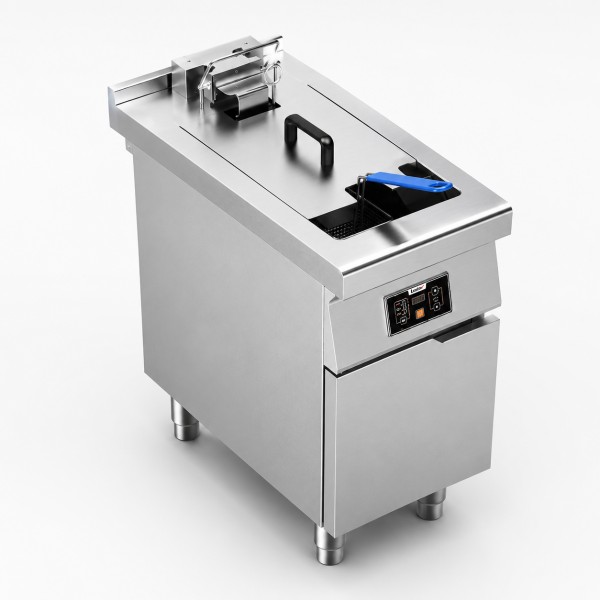
One of the most important benefits of using an electric fryer in a commercial kitchen is precise temperature management. Consistent oil temperature has a direct effect on food texture, color, taste, and cooking time. If the temperature is too low, food may absorb excess oil and become greasy. If it is too high, the outside can overcook before the inside is properly finished.
Electric fryers are often preferred because they provide more accurate and stable temperature control. This helps kitchen staff repeat the same cooking result across multiple batches, which is essential in commercial service.
When businesses serve customers all day, product consistency matters. Accurate heat control helps maintain a more uniform finish across repeated frying cycles.
With reliable thermostat performance, staff can depend more on the equipment and less on manual adjustment. This can reduce errors during busy service periods.
Foods with a more even golden color and crisp texture are easier to standardize, which is especially valuable for chain operations and branded menus.
For companies that handle larger order volumes, high capacity electric fryers for businesses offer an important operational advantage. A larger oil tank and stronger recovery performance allow the fryer to manage repeated cooking loads without major drops in temperature.
This is especially useful in high-demand environments such as:
· fast food restaurants
· food courts
· hotel kitchens
· school and hospital canteens
· catering production lines
· central kitchens and takeaway operations
A high-capacity electric fryer helps operators process more food within a given time frame. That does not only mean faster output. It also means less waiting between batches, smoother kitchen flow, and better use of labor during rush periods.
In many commercial kitchens, timing is everything. If one station slows down, the entire workflow can be affected. Electric fryers designed for business use can help prevent that bottleneck.
Another major advantage of electric fryers is installation flexibility. In many settings, businesses choose electric models because they are easier to position within a commercial kitchen layout, especially where gas infrastructure is limited or where the project requires a cleaner and more compact utility arrangement.
Electric fryers are often considered practical for:
For new restaurants or foodservice spaces, electric equipment may simplify equipment planning and utility coordination.
Shopping malls, kiosks, and compact retail kitchens may find electric fryers easier to integrate into a controlled indoor environment.
An electric setup can support a more organized kitchen arrangement, particularly where space planning and workflow design are priorities.
This flexibility does not mean every kitchen should automatically choose electric equipment, but in many commercial situations it becomes a very attractive option because of how well it fits modern kitchen design needs.
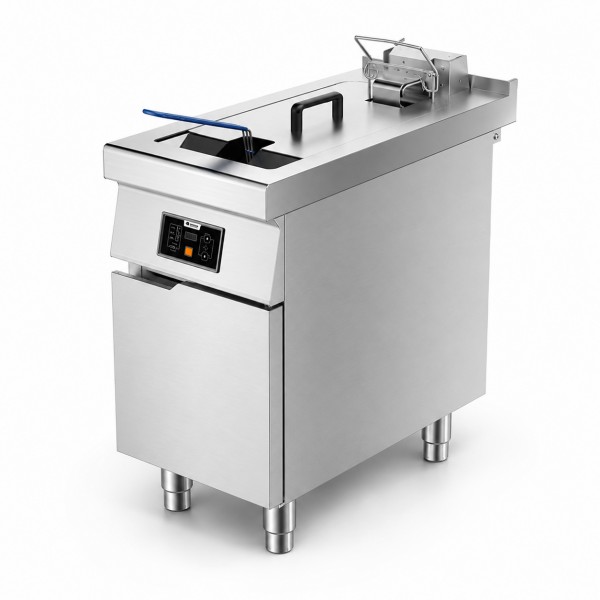
When buyers discuss the benefits of using an electric fryer in a commercial kitchen, energy use is always an important topic. Actual efficiency depends on fryer design, insulation, usage habits, batch frequency, and maintenance, but electric fryers are often recognized for converting energy into cooking performance in a stable and direct way.
Because commercial electric fryers can offer controlled heating and responsive temperature regulation, they help reduce unnecessary fluctuation during operation. In practical terms, this can contribute to more stable kitchen performance and better use of energy during service.
Below is a simple comparison that helps explain where electric fryers are often valued in commercial use:
Feature | Commercial Electric Fryer | Traditional Lower-Capacity Frying Setup |
Temperature Control | Precise and stable | May vary more during service |
Batch Consistency | High | Moderate |
Capacity for Busy Hours | Strong in high-capacity models | Limited |
Installation Flexibility | Good for many indoor kitchens | Depends on setup |
Workflow Efficiency | Supports steady production | Can slow under heavy demand |
Operator Convenience | Easy to manage in many cases | Often more manual |
This comparison shows why electric fryers are increasingly selected by operators who want consistency and dependable day-to-day performance, not only basic frying capability.
In a commercial kitchen, equipment must be practical for the staff who use it every day. A fryer may perform well in theory, but if it is difficult to operate during service, it can slow down the team and increase mistakes. One reason electric fryers remain popular is their straightforward usability.
Many electric fryers are designed with intuitive control systems that allow operators to adjust temperature and timing quickly. This is useful in kitchens where staff turnover is high or where multiple team members use the same equipment.
Predictable heating behavior helps kitchen staff plan their work more effectively. This is particularly valuable during lunch and dinner peaks when timing affects customer wait times.
The value of an electric fryer is not limited to convenience. It also affects the final product that reaches the customer. Better heat control and steadier performance can support better frying outcomes across a range of menu items.
A stable frying temperature helps create a more desirable texture, especially for products that depend on a crisp exterior and moist interior.
When the oil stays at the intended frying range, food is less likely to soak up too much oil. This improves both quality and presentation.
Commercial kitchens need fried foods to look the same every time. Electric fryers help maintain a more repeatable finish, which is important for brand image and customer expectations.
From fries and onion rings to chicken wings and seafood, an electric fryer can support multiple products with reliable control, provided the fryer is sized and managed properly.
These quality-related advantages matter because in foodservice, consistency is part of the customer experience.
Understanding the benefits of using an electric fryer in a commercial kitchen helps businesses make better equipment decisions based on real operational needs. Electric fryers offer clear advantages in temperature precision, product consistency, workflow efficiency, installation flexibility, and suitability for high-volume use. For food businesses that need dependable frying performance, especially during rush periods, high capacity electric fryers for businesses can play an important role in improving both productivity and food quality. From our perspective as a commercial kitchen equipment manufacturer, the best fryer choice always depends on menu structure, service volume, kitchen layout, and long-term operating expectations. That is why we believe buyers should look beyond basic specifications and focus on how the fryer will perform in actual daily use. At Shenzhen Mantru.E Commercial Equipment Manufacturing Co., Ltd., we understand that professional kitchens need equipment that is practical, durable, and aligned with real business demands. For readers who want to explore commercial electric fryer solutions in more detail, learning more from our team can be a useful next step in finding the right fit for their kitchen.
Many restaurants choose electric fryers because they offer better temperature control, more consistent cooking results, and easier day-to-day operation in busy commercial environments.
They can be, but only if the production volume justifies the capacity. Small businesses should choose a fryer based on actual menu demand, available space, and workflow needs.
Yes. A stable frying temperature can help improve texture, color, and consistency while reducing the risk of greasy or unevenly cooked food.
Commercial buyers should consider capacity, temperature control, build quality, ease of cleaning, kitchen layout, menu requirements, and supplier support before making a decision.


