


Views: 0 Author: Site Editor Publish Time: 2026-03-30 Origin: Site


Choosing the right fryer is a bigger decision than many restaurant owners expect. A fryer is not just another kitchen appliance. It affects food quality, service speed, staff workflow, energy consumption, maintenance routines, and overall operating cost. For restaurants that serve fried chicken, French fries, seafood, snacks, or fast-casual menu items, the wrong fryer can slow down the kitchen and increase unnecessary expense. That is why many buyers ask an important question: Commercial deep fryers vs. electric fryers: which is better for restaurants? The answer depends on several factors, including menu structure, kitchen size, daily volume, installation conditions, and long-term management goals. In some restaurants, a traditional commercial deep fryer may be the preferred solution because of production speed and strong heat recovery. In others, electric fryers, especially automatic commercial electric fryers, may offer better precision, cleaner operation, and easier installation. Rather than treating one option as universally superior, it is more useful to compare how each type performs in real restaurant conditions and how that performance aligns with the needs of different foodservice businesses.
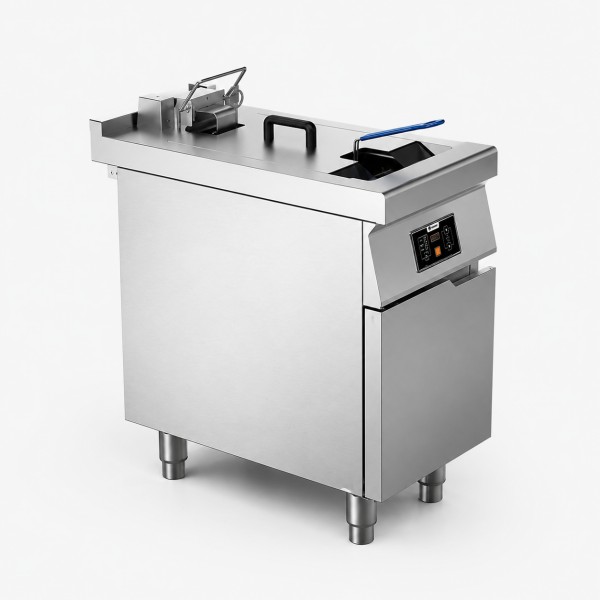
Before making a comparison, it helps to define what restaurants usually mean by these terms. In many cases, “commercial deep fryers” is a broad category that includes both gas and electric units used for high-volume frying. However, in buying discussions, restaurant owners often contrast traditional gas commercial deep fryers with electric fryers. That comparison is what matters most in real purchasing decisions.
A commercial deep fryer is designed for professional kitchen use, with larger oil capacity, stronger construction, and higher output than domestic fryers. An electric fryer uses electric heating elements to heat the oil, while gas fryers rely on burners and flame-based heat transfer. Both can produce excellent fried food, but they differ in installation, temperature response, operating cost, and kitchen compatibility.
For restaurants, the real issue is not only how the fryer heats oil, but how that heating method influences daily performance.
The biggest difference between gas-based commercial deep fryers and electric fryers is the heat source, and that difference affects everyday kitchen work more than many buyers realize.
Gas fryers are often chosen for their powerful heating capability. In busy kitchens with nonstop orders, they are valued for fast recovery times after frozen food is dropped into the oil. High-output gas systems can be useful in restaurants where speed is everything.
Electric fryers, on the other hand, are known for their temperature consistency and more controlled heating performance. Because the heating elements are immersed directly in or closely connected to the oil system, they can offer precise temperature management. In many modern kitchens, this precision helps improve product consistency, especially when menu quality matters as much as speed.
The practical question is simple: does the kitchen need maximum raw output, or does it benefit more from controlled, stable frying performance? Different restaurant models will answer that question differently.
Restaurants do not buy fryers simply to heat oil. They buy them to produce food that is crisp, attractive, repeatable, and profitable. From that perspective, performance is about more than power.
Electric fryers often perform very well in kitchens that prioritize uniform frying results. Their stable temperature control can help reduce undercooking, over-browning, and inconsistent texture across batches. This can be especially important for restaurants with standardized menu items, franchised operations, or kitchens staffed by employees with varying experience levels.
Gas commercial deep fryers are often appreciated for fast heat recovery, which can be useful during rush periods. When basket after basket is loaded quickly, the fryer needs to recover temperature efficiently to maintain production speed. This is one reason many high-volume fast-food and fried chicken operators continue to use gas-based systems.
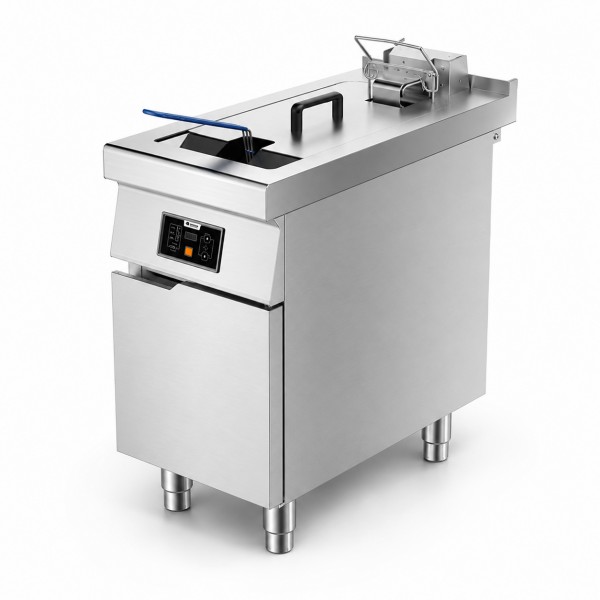
Electric fryers usually have an advantage in temperature precision, which supports uniform product quality.
Gas fryers are often favored in high-volume settings where rapid recovery is a priority.
Consistent heating can help reduce oil stress in some operations, supporting longer oil life when the fryer is properly managed.
Light snacks, frozen items, battered foods, and breaded proteins may behave differently depending on fryer design and basket workflow.
Many restaurant owners first compare price tags, but the real cost of a fryer includes several layers: purchase price, installation cost, utility usage, service requirements, and daily labor efficiency.
The table below offers a simplified comparison.
Factor | Gas Commercial Deep Fryers | Electric Fryers |
Initial equipment cost | Often competitive | Often competitive to slightly higher depending on features |
Installation complexity | May require gas line and ventilation planning | Often easier where electric infrastructure is ready |
Temperature control | Strong, but may vary by model | Usually very precise |
Heat recovery | Often faster in high-output models | Good, especially in advanced commercial models |
Cleaning convenience | Depends on design | Often easier in compact kitchen layouts |
Energy management | Good for high-volume use | Good for controlled and efficient operation |
Best fit | Large-volume frying kitchens | Restaurants seeking precision, simplicity, and clean operation |
This comparison shows why there is no single answer for every kitchen. A small café with limited ventilation needs may see electric fryers as the smarter investment, while a fast-paced outlet serving hundreds of fried portions a day may place more value on gas performance.
Kitchen layout is one of the most practical reasons a restaurant chooses one fryer type over another. In some locations, fryer selection is limited by the building itself rather than by the menu.
Electric fryers are often easier to integrate into compact or modern kitchen spaces, especially where electric access is straightforward and gas line installation is inconvenient or expensive. Some restaurant operators also prefer electric units because they feel cleaner and simpler in front-of-house-adjacent kitchen designs.
Gas commercial deep fryers may require more planning depending on local codes, ventilation arrangements, and existing utility setup. In purpose-built restaurant kitchens, this may not be a problem. In smaller leased spaces, however, installation requirements can influence the final decision more than cooking performance alone.
For restaurants opening in shopping centers, food courts, commercial buildings, or renovated spaces, installation flexibility can become a decisive factor.
Safety and cleaning are everyday management issues, not secondary concerns. A fryer that performs well but creates more operational difficulty may not be the best long-term choice.
Electric fryers are often appreciated for their straightforward operation and precise controls. Many models include programmable temperature settings, timers, and automatic shutoff features that support safer day-to-day use. This is one reason automatic commercial electric fryers are increasingly attractive to restaurants that want to simplify training and reduce operator error.
Gas fryers also perform well in professional kitchens, but their maintenance routines may involve burner inspection, gas connection checks, and broader attention to combustion-related components. That does not make them unsuitable, but it does mean maintenance planning should be part of the buying decision.
· ease of staff training
· cleaning frequency
· oil filtration options
· parts replacement availability
· temperature control accuracy
· shutdown and safety features
When restaurants compare fryer options, these practical details often matter just as much as heating speed.
So, commercial deep fryers vs. electric fryers: which is better for restaurants? The most accurate answer is that the better option depends on the restaurant’s menu, output, kitchen design, staffing model, and long-term operating priorities. Electric fryers often stand out for their precision, cleaner operation, installation flexibility, and compatibility with automation, which makes them especially attractive for restaurants seeking stable quality and easier management. Gas-based commercial deep fryers continue to offer strong value in high-volume environments where rapid recovery and continuous production matter most. From our perspective, restaurant owners should not choose equipment based only on initial price or general preference. A fryer should fit the daily rhythm of the kitchen and support both food quality and business efficiency. At Shenzhen Mantru.E Commercial Equipment Manufacturing Co., Ltd., we believe the best equipment decisions come from practical comparison and a clear understanding of real cooking needs. For buyers who want to explore suitable commercial frying solutions in more detail, it is worth learning more about the available options and discussing the right setup with an experienced manufacturer.
Yes. Many commercial electric fryers are designed for professional kitchens and can deliver reliable output, accurate temperature control, and consistent food quality.
In many high-volume situations, gas fryers are valued for faster heat recovery, which can help maintain production speed during busy service periods.
For many restaurants, yes. Automatic commercial electric fryers can improve consistency, simplify staff operation, and reduce manual control errors during busy shifts.
Electric fryers are often easier to install in smaller spaces, especially where gas lines or complex ventilation arrangements are more difficult to implement.


