


Views: 0 Author: Site Editor Publish Time: 2026-09-01 Origin: Site


A commercial induction hob is not only a cooking appliance; it is also a high-performance electrical device that must match the power infrastructure of a professional kitchen. Before installation, buyers need to consider more than the cooking capacity. Voltage, phase, frequency, rated current, circuit design, grounding, and total kitchen load all influence whether the equipment can operate safely and reliably.
The electrical requirements of a commercial induction hob depend on the exact model and application. A compact built-in unit used for a small preparation area may have very different requirements from a multi-zone induction range designed for continuous restaurant service. Understanding these differences before purchase helps avoid installation delays, unexpected electrical upgrades, and compatibility problems.
Electrical Factor | Why It Matters |
|---|---|
Rated Power (kW) | Determines the approximate electrical load created by the equipment. |
Voltage | Must match the available building power supply. |
Phase | Affects current distribution and connection design. |
Frequency | Ensures compatibility with the electrical system. |
Rated Current | Provides the basis for circuit and protection planning. |
Connection Method | Determines installation requirements and electrical accessories. |
The required voltage of a commercial induction hob depends on the equipment design and the electrical system available at the installation site. Commercial kitchens around the world use different electrical standards, so selecting equipment based only on appearance or power output can create problems during installation.
Before ordering, buyers should confirm the available site voltage and compare it with the approved appliance specification. Common commercial electrical systems may include different voltage levels and phase arrangements depending on the region. A hob designed for one electrical environment may not operate correctly if connected to another without proper engineering approval.
Voltage compatibility should always be checked together with phase and frequency. These three factors work as a complete electrical requirement rather than separate specifications.
A common mistake is assuming that voltage determines the entire installation. In reality, two appliances with similar voltage ratings may have different current requirements, connection methods, and circuit protection needs.
For example, a small single cooking zone and a four-zone commercial induction range may both operate on compatible voltage systems but create very different demands on the electrical distribution network.
The built-in induction hob is designed for applications where a compact cooking solution is required. However, even smaller commercial equipment should be evaluated according to the final electrical specification rather than general assumptions.
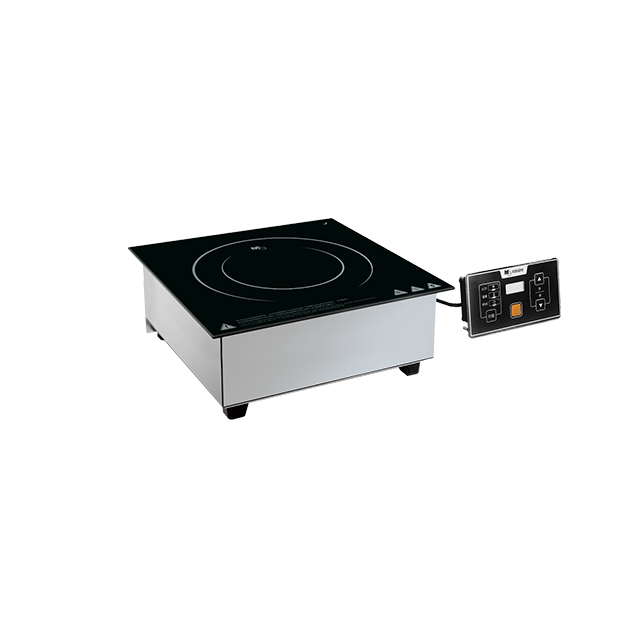
The current requirement of a commercial induction hob depends on several electrical factors, including power rating, voltage, phase configuration, and efficiency characteristics. Because of this, there is no single amp value that applies to every model.
A simple calculation can provide an initial estimate. For single-phase equipment, current is generally related to power divided by voltage, while more accurate calculations also consider power factor. Three-phase equipment uses a different calculation method because the electrical load is distributed across multiple phases.
However, theoretical calculations should not replace the appliance's rated current information. Final circuit design requires consideration of the actual equipment data and installation conditions.
Common Mistake | Why It Creates Problems | Better Approach |
|---|---|---|
Selecting breaker size only from kW | Ignores voltage, phase, and installation conditions. | Use the approved electrical specification. |
Choosing cable size only from power rating | Does not consider installation environment. | Evaluate conductor requirements professionally. |
Assuming every zone uses the same circuit | Different models have different internal designs. | Follow the equipment wiring requirements. |
In many commercial kitchen installations, a dedicated circuit is the preferred approach because induction equipment can represent a significant continuous electrical load. Sharing circuits with unrelated appliances can complicate load management and make troubleshooting more difficult.
A dedicated circuit does not mean every commercial induction hob uses the same breaker or cable size. Electrical protection must be coordinated with the appliance requirements and the installation environment.
Important factors include:
Rated appliance current
Conductor capacity
Cable installation method
Ambient temperature
Circuit grouping conditions
Voltage drop considerations
Local electrical requirements
Grounding is an essential part of commercial kitchen electrical safety. Metal cooking equipment requires appropriate protective earthing and electrical protection according to the installation environment.
Depending on the market, additional protective devices may be required. These requirements can vary, so buyers should confirm the correct installation method before equipment delivery.
The choice between single-phase and three-phase power depends on both the equipment and the available electrical infrastructure.
Single-phase commercial induction hobs are commonly suitable for smaller cooking applications where the electrical demand remains within the site's available capacity. Larger equipment with multiple cooking zones may require a different supply arrangement to manage the increased electrical load effectively.
The important factor is not simply the number of burners. The total rated input, internal design, and electrical specification determine the appropriate supply method.
The 2-burner induction flat range represents a larger cooking configuration compared with a single-zone hob. Equipment with multiple cooking positions should always be reviewed together with the building's electrical capacity.
A commercial induction hob should not be evaluated separately from the rest of the kitchen. Professional kitchens often contain multiple electrical appliances operating at the same time.
The total electrical load may include:
Induction cooking equipment
Electric ovens
Steam equipment
Dishwashers
Refrigeration systems
Ventilation systems
Water heating equipment
A kitchen that can support one commercial induction hob may not automatically support several units. Reviewing the complete electrical demand before expansion helps prevent capacity problems later.
The 4-burner induction flat range demonstrates why larger cooking systems require careful planning. Multiple cooking zones increase connected load and may influence the required electrical infrastructure.
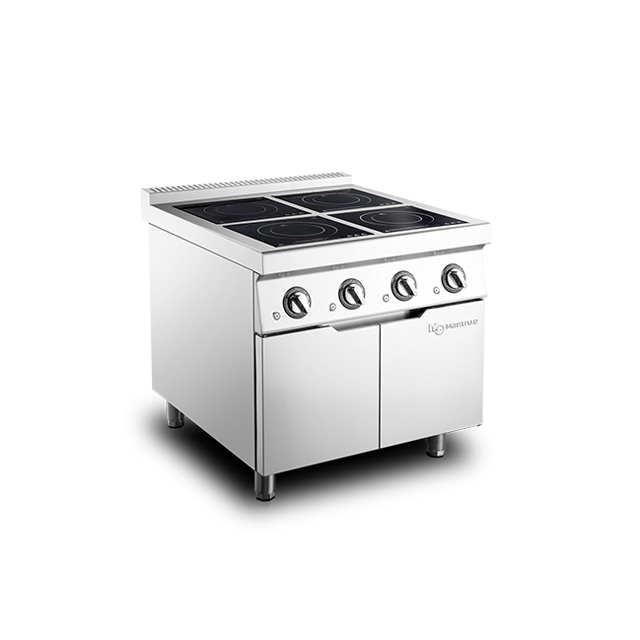
One of the most expensive mistakes is selecting a commercial induction hob first and checking electrical compatibility afterward. If the available supply cannot support the equipment, additional electrical work may delay installation.
A restaurant or foodservice operation may add more cooking equipment later. Using all available electrical capacity during the first installation can limit future growth.
Energy consumption during normal operation and electrical installation capacity are different considerations. Even if equipment usually operates below maximum output, the installation must still support the designed operating conditions.
The electrical requirements of a commercial induction hob depend on the complete relationship between the appliance and the kitchen infrastructure. Voltage, phase, frequency, rated current, circuit design, grounding, and total electrical capacity must all be considered before installation. For single units and larger multi-zone systems, the safest approach is to confirm the exact equipment specification and match it with the site's electrical conditions. Shenzhen Mantru.E Commercial Equipment Manufacturing Co., Ltd. provides commercial induction cooking equipment for professional kitchen applications, including built-in and multi-zone induction solutions.
The required voltage depends on the specific model and destination market. Buyers should confirm the approved voltage, phase, and frequency before installation.
The amp requirement should be based on the equipment's rated current information. Power and voltage calculations can provide estimates, but they should not replace the final electrical specification.
Some smaller units may use approved plug connections, while larger commercial equipment may require dedicated circuits or fixed wiring. The correct connection method depends on the model and local electrical requirements.
Generally, equipment with more cooking zones has a higher connected load. The total electrical requirement should be reviewed before installation.
Provide the destination country, available voltage, phase, frequency, installation environment, and expected cooking capacity. This helps ensure the selected equipment matches the project requirements.


