


Views: 0 Author: Site Editor Publish Time: 2026-09-02 Origin: Site


Choosing cookware for a restaurant induction station is not simply a matter of buying a 24 cm, 28 cm, or 32 cm pan. A commercial induction hob works through the magnetic base of the cookware, so the diameter that matters most is the flat induction-compatible bottom rather than the wider rim at the top. If the base is too small, the hob may not recognize the pan reliably. If it is much larger than the active heating area, the outer portion may heat less directly. The right cookware size therefore depends on the cooking zone, pan-base geometry, menu, batch volume, and daily kitchen workflow.
Restaurants should choose cookware with a flat magnetic base that fits the permitted pan-size range of the specific commercial induction hob. Measure the bottom contact diameter, not the top rim, handles, or overall width.
There is no single pan diameter that is correct for every induction unit. A restaurant should first identify its smallest frequently used saucepan and largest regularly used stockpot, then confirm that both are compatible with the chosen cooking zones. Pan material, flatness, spacing between adjacent burners, cooking volume, and required heating speed should also be considered before purchasing cookware.
Restaurant cookware is often sold by the diameter measured across the top opening. That dimension is useful for lids, storage, and capacity comparisons, but it can be misleading when matching cookware to a commercial induction hob.
A frying pan described as 28 cm across the rim may have a noticeably smaller flat base. A stockpot may have nearly vertical sides and a base close to its advertised diameter. Two pieces of cookware carrying the same nominal size can therefore interact very differently with the same induction zone.
Turn the empty pan over and measure the widest flat section of the base that sits over the ceramic-glass cooking surface. If the bottom curves upward toward the sidewalls, do not include the curved area when estimating the effective base diameter.
If the cookware uses a bonded induction plate, focus on the magnetic section at the bottom rather than the full external width of the pan body. The induction-compatible area is more relevant to heating performance than the diameter of a non-magnetic outer section.
Handles, pouring lips, flared sides, and wide upper rims do not help the induction coil transfer energy. Overall dimensions still matter for kitchen spacing, but they should not be confused with the base measurement used to evaluate induction compatibility.
Correct diameter does not compensate for a badly warped base. Cookware should sit securely on the flat cooking surface without rocking excessively. A distorted bottom can reduce stability and contribute to inconsistent cooking behavior.
Commercial pans experience repeated heating, cooling, washing, stacking, and handling, so durability should be considered together with diameter. A pan that begins flat but deforms quickly under restaurant use can become a poor match for the equipment over time.
The most reliable approach is to start with the menu and production process instead of buying a generic induction cookware set. List the cookware used during normal service, measure the flat base of each critical pan, and compare those measurements with the commercial induction hob being considered.
Restaurant Task | Cookware Question | Equipment Check | Main Risk |
|---|---|---|---|
Small sauces and reheating | How small is the saucepan base? | Minimum compatible pan-base size | Small pan may not be detected reliably |
Sautéing and frying | How wide is the flat magnetic base? | Cooking-zone size and power | Wide rim can hide a much smaller base |
Soup, stock, and boiling | How large is the stockpot base? | Recommended maximum cookware size | Large overhang can reduce edge heating |
Batch cooking | How many large pans operate together? | Spacing between adjacent zones | Cookware can block neighboring stations |
Specialty cooking | Is the cookware flat and magnetic? | Cookware compatibility requirements | Correct diameter but unsuitable construction |
A pan can fit an individual cooking zone but still cause workflow problems on a multi-burner range. Wide rims and long handles can interfere with cookware on neighboring zones, restrict access to controls, or make it difficult for chefs to work efficiently.
Restaurants should therefore evaluate both the induction base diameter and the overall external dimensions of the cookware when several zones will be used at the same time.
Cookware-size problems can look like equipment faults. Before assuming that a commercial induction hob is malfunctioning, check the pan material, bottom diameter, position, and condition.
Symptom | Possible Cookware Cause | Practical Check |
|---|---|---|
Hob does not begin heating | Pan base may be too small or insufficiently magnetic | Try a larger induction-compatible pan |
Heating seems weaker than expected | Pan may be poorly centered or have a limited magnetic base area | Center a correctly sized flat-bottom pan |
Center heats faster than the edges | Pan base may extend well beyond the active induction area | Test cookware with a base closer to the zone size |
Pan works inconsistently | Base may be warped or poorly matched to the hob | Inspect the bottom for flatness and magnetic coverage |
Cookware interferes with adjacent burners | Pan body or handles are too large for the layout | Check total cookware width and handle position |
This troubleshooting step is especially useful in restaurant kitchens where cookware from different suppliers, sizes, and construction types may be used on the same equipment. Two pans with similar top diameters can perform differently because their bases are built differently.
A correctly sized pan still needs an induction-compatible magnetic base. Ferrous stainless steel, cast iron, and other magnetically responsive cookware constructions are commonly used with induction equipment.
Aluminum and copper are not inherently suitable for induction unless the cookware includes a compatible magnetic layer or base. A simple magnet test can help determine whether the bottom contains magnetic material, but magnetic attraction alone does not guarantee identical cooking performance across different pans.
Base thickness, material distribution, flatness, magnetic coverage, and overall cookware construction can influence how quickly and evenly heat spreads across the vessel.
Flat commercial induction hobs are intended for cookware with a stable flat bottom. This makes them suitable for many saucepans, frying pans, sauté pans, stockpots, and similar restaurant vessels.
Round-bottom traditional woks are a different case. A restaurant that relies on round-bottom wok cooking should evaluate equipment specifically designed around that cookware shape rather than assuming that a larger flat cooking zone will solve the compatibility issue.
Large cookware can become extremely heavy when filled with water, soup, sauce, or ingredients. A restaurant should not choose a larger pot simply because it physically fits the hob.
Capacity must also match staff handling, lifting, cleaning, storage, and workflow requirements. The most practical cookware is the size that meets production needs without creating unnecessary handling difficulties.
After measuring the pans, restaurants should consider how many cooking zones are required during peak service. The best configuration depends on the number of dishes being prepared simultaneously, available kitchen space, electrical planning, and the type of cookware used most often.
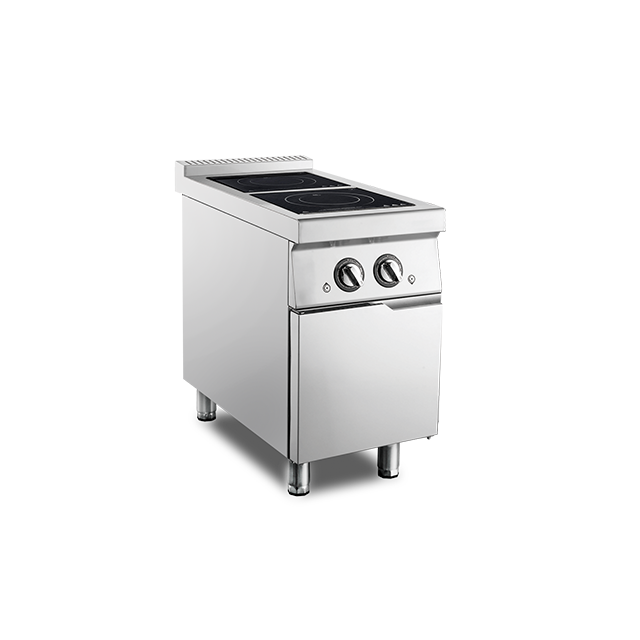
For kitchens that need two flat induction cooking positions in one freestanding unit, the Two-Burner Induction Range provides two induction zones in a stainless-steel floor-standing format.
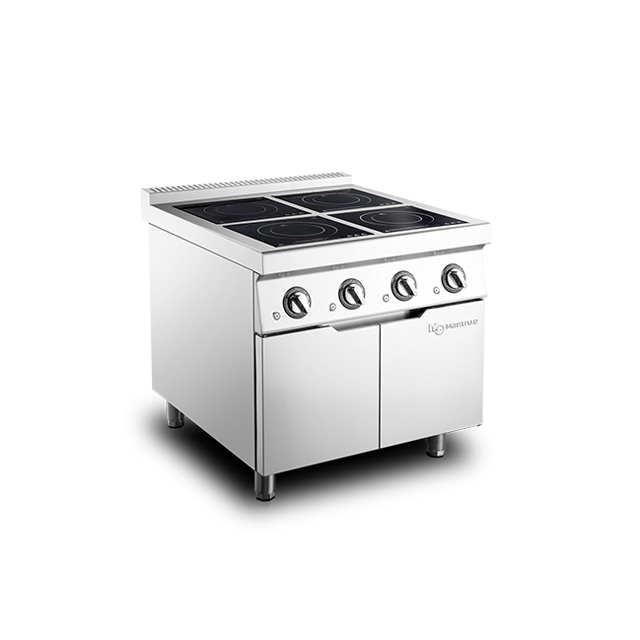
Restaurants that need more simultaneous pan positions can consider the Four-Burner Induction Range, which combines four induction cooking zones in one freestanding unit.
For an additional preparation station, compact kitchen, or single-pan cooking position, the Countertop Induction Cooktop offers a single flat induction zone in a countertop format.
Equipment dimensions and visible zone markings should not be used to guess cookware compatibility. Before purchasing a complete cookware set, confirm the acceptable pan-base range for the exact model and compare it with the cookware already used in the kitchen.
The right cookware size for a commercial induction hob is determined primarily by the flat magnetic base, not the pan's top diameter. Restaurants should measure their smallest and largest frequently used vessels, confirm that both fit the selected cooking zones, and then consider material, flatness, power demand, batch size, and spacing between neighboring pans. Cookware and equipment should be selected as one system rather than as separate purchases. Shenzhen Mantru.E Commercial Equipment Manufacturing Co., Ltd. manufactures commercial electric cooking equipment, including induction flat ranges and countertop induction units for professional kitchen applications.
The most suitable pan is one whose flat magnetic base falls within the permitted cookware range of the cooking zone and is reasonably matched to the active induction area. There is no single diameter that works best on every commercial induction hob.
Measure the flat bottom area that sits over the cooking surface. The upper rim may be much wider and does not accurately represent the magnetic area interacting with the induction zone.
A pan may physically extend beyond the visible cooking area, but excessive overhang can affect heating performance because the outer section of the base is farther from the active induction region. Confirm the permitted cookware size for the specific equipment.
The cookware may contain magnetic material but still have a base that is too small for reliable detection. Poor centering, limited magnetic coverage, or an unsuitable base construction can also contribute to the problem.
Not automatically. Heating demand depends on the amount of food or liquid, starting temperature, target temperature, required recovery time, pan construction, and cooking process. Pot diameter and hob power should be evaluated together.
Only if the cookware meets the compatibility and size requirements of each zone. Before standardizing one cookware set across a kitchen, compare the base dimensions with every induction unit used during service.


