


Views: 0 Author: Site Editor Publish Time: 2026-09-09 Origin: Site


A commercial induction range can perform well during routine prep yet become a bottleneck when several pans, stockpots, or woks demand heat at the same time. That is why power selection should be based on the busiest operating window rather than average daily usage. Burner count alone is not enough: buyers need to consider power per cooking zone, how many zones will run simultaneously, cookware load, recovery expectations, voltage, and the electrical capacity available at the site. For many professional kitchens, the real question is not simply “How many kilowatts does the range have?” but “Can that power be delivered where and when the cooking line needs it?”
Start by identifying the maximum number of induction zones likely to be working hard at the same time. Multiply the zone ratings to understand the equipment's maximum rated power, then compare that figure with the kitchen's actual cooking pattern and available electrical infrastructure.
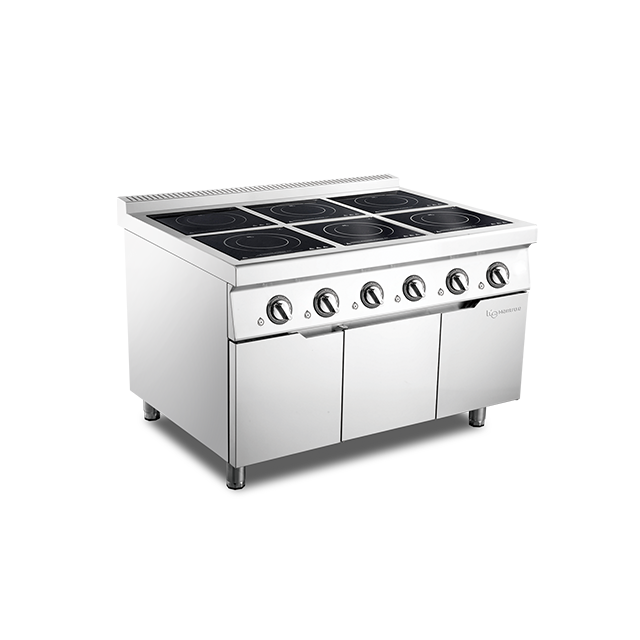
A four-zone commercial induction range with 3.5 kW per zone has 14 kW of combined rated power.
A six-zone configuration at 3.5 kW per zone increases combined rated power to 21 kW.
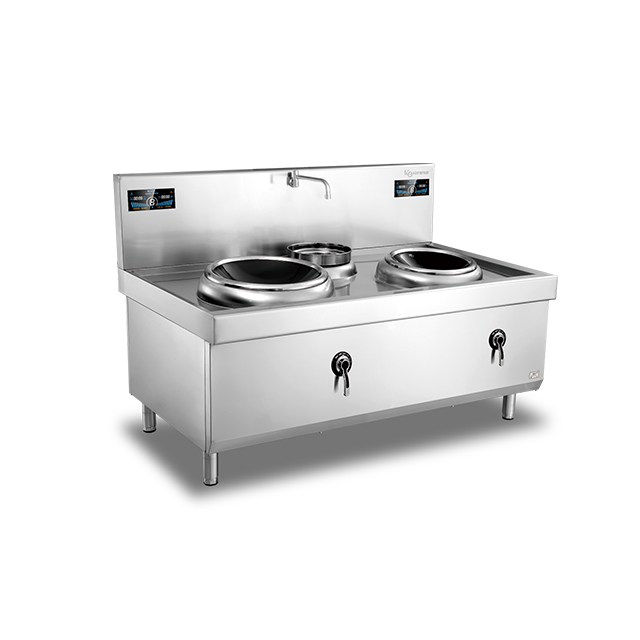
A high-output wok station can concentrate considerably more power into fewer cooking positions.
Electrical installation must still be designed for the appliance's verified nameplate requirements rather than an assumed kitchen diversity factor.
Peak-service sizing therefore has two separate questions: how much cooking power the menu needs and whether the building can safely supply the selected equipment. Neither should be solved by burner count alone.
The easiest first calculation is the sum of the individual induction-zone ratings. A four-burner range with four 3.5 kW zones, for example, provides a maximum combined rating of 14 kW. Adding more cooking positions increases the potential simultaneous load even when the power of each individual zone remains unchanged.
Mantru.E's 4-Burner Induction Range uses four 3.5 kW cooking positions for a combined 14 kW rating at 380 V. Its 6-Burner Induction Range increases the configuration to six 3.5 kW positions, producing 21 kW of combined rated power at 380 V.
Range Configuration | Zone Power | Combined Rated Power | Peak-Service Planning Implication |
|---|---|---|---|
4 cooking zones | 3.5 kW × 4 | 14 kW | Four independent pans can be allocated across the station without increasing per-zone power. |
6 cooking zones | 3.5 kW × 6 | 21 kW | More simultaneous cookware positions increase total potential electrical demand. |
Two-wok configuration | 20 kW + 15 kW | 35 kW combined | Power is concentrated into two high-output cooking positions rather than distributed across many flat zones. |
The third configuration illustrates an important purchasing distinction. The Two-Wok Induction Range is listed with a 20 kW + 15 kW, 380 V power configuration. Its 35 kW combined rating is much higher than the flat ranges because the cooking application and power distribution are different.
This is why comparing commercial induction ranges only by the total kW figure can be misleading. A 21 kW six-zone range and a high-power wok station solve different production problems even though both rely on induction heating.
There is no universal per-burner wattage that is correct for every professional kitchen. The useful level depends on what each zone must do during the busiest service period. A commercial induction range used primarily for simmering sauces and finishing dishes has different recovery requirements from one repeatedly heating large quantities of cold liquid or handling high-turn pan cooking.
Instead of choosing the highest available kW automatically, evaluate four factors together: cookware size, food mass, starting temperature, and required turnaround time. Increasing power may shorten recovery in demanding processes, but extra output creates little operational value if the menu rarely uses it or the cookware cannot make practical use of the heating zone.
Cooking Pattern | What to Evaluate | Power-Sizing Risk |
|---|---|---|
À la carte sauté and pan work | Number of simultaneous pans and required recovery between orders | Too few usable zones can create a queue even when each zone is powerful. |
Sauce, simmering, and holding | Low-output control plus occasional recovery demand | Specifying maximum power alone ignores the need for controllability. |
Stock, soup, or bulk boiling | Vessel diameter, liquid volume, starting temperature, and boil recovery | A low-powered station can extend batch cycles during heavy production. |
High-output wok cooking | Wok dimensions, batch size, cooking rhythm, and concentrated heat demand | Comparing wok equipment directly with standard flat-zone wattage can lead to the wrong selection. |
A 3.5 kW zone should therefore be treated as a defined power level rather than an automatic answer to every menu. The more useful question is whether 3.5 kW at each active position supports the actual pan load and ticket rhythm. If four positions are enough but cooks constantly wait for recovery, adding burners may not solve the problem. Conversely, if individual zones recover adequately but chefs are waiting for a free position, additional zones may matter more than higher per-zone output.
Commercial induction range selection is also a facilities decision. Higher total kW means the electrical system must support a larger connected load, so voltage and available site capacity should be reviewed before equipment configuration is finalized. This becomes especially important when converting an existing gas kitchen to an all-electric line or adding several induction appliances to a facility that was not originally designed for them.
For a balanced three-phase system, a simplified theoretical current calculation is:
I ≈ P ÷ (√3 × V)
If a 380 V supply were three-phase and the simplified calculation assumed a power factor of 1, the theoretical figures would be approximately 21.3 A for 14 kW, 31.9 A for 21 kW, and 53.2 A for 35 kW. These values are useful only for preliminary comparison. Actual appliance input current, phase arrangement, power factor, protective-device requirements, wiring, and allowable loading must come from the verified electrical documentation and applicable local rules.
Do not choose a breaker merely by rounding one of these calculated values upward. A buyer should obtain the actual nameplate electrical data before the kitchen layout and electrical drawings are frozen.
The range is rarely the only major electrical appliance operating during a lunch or dinner rush. Fryers, steam equipment, refrigeration, dishwashing, ventilation, water heating, and other loads may operate concurrently. A commercial induction range may fit the cooking requirement while still creating a problem at the distribution-board or building-service level.
For a new all-electric project, examine the whole kitchen load schedule rather than approving appliances individually. For a retrofit, determine how much capacity already exists, how much is actually available, and whether upstream electrical work would be required before comparing equipment prices.
A common sizing mistake is using average operating power to justify a smaller electrical design. A kitchen may spend much of the day below maximum output, but the commercial induction range still has to support the workload that occurs when multiple tickets arrive together.
For equipment selection, map the busiest 15 to 30 minutes of service. Record which pans or woks are normally active, what each position is doing, and which processes must recover immediately. This produces a much more realistic peak-service picture than estimating from the number of meals served per day.
At the same time, do not automatically assume every induction zone will remain at its highest setting throughout the entire operating period. After food reaches temperature, some processes need considerably less heat. That can reduce real energy consumption, but it should not be confused with the requirements for safely designing the appliance circuit or determining whether a station can handle a worst-case service period.
It is tempting to apply an arbitrary percentage such as “only 70% of the burners will ever run together.” That assumption can produce a range that works during normal periods but falls short when the chef needs every position during a rush. Use a reduced simultaneous cooking requirement only when the workflow genuinely supports it.
There is also a cost consideration beyond total energy consumption. In markets where commercial electricity billing includes demand-related charges, a larger simultaneous electrical peak can affect operating cost differently from the same amount of energy spread over a longer period. Sequencing high-load preparation can sometimes reduce the facility peak, but it should only be considered where the menu and service schedule permit it.
Rather than starting with a catalogue wattage, procurement teams can size a commercial induction range through a short operating analysis.
List the busiest menu processes. Identify boiling, sautéing, frying, simmering, wok cooking, reheating, and other jobs that compete for the range during peak service.
Count simultaneous cooking positions. Determine the maximum realistic number of active pans or woks rather than the average number in use.
Identify the hardest thermal jobs. Large cold batches, repeated boiling, high-turn pan work, and other recovery-sensitive processes deserve more attention than holding tasks.
Compare zone power with burner count. Decide whether the bottleneck comes from insufficient output at individual positions or insufficient positions overall.
Check site electricity before final selection. Confirm voltage, frequency, phase configuration, available capacity, appliance nameplate current, and installation requirements.
Allow for the whole hot line. Review the range together with other electrical cooking equipment so one appliance does not consume capacity needed elsewhere.
The right commercial induction range power level is determined by simultaneous peak-service demand, not burner count or maximum wattage alone. Begin with the number of active cooking positions, then examine cookware load, recovery requirements, menu style, and the electrical capacity available to the kitchen. A 14 kW four-zone range, a 21 kW six-zone range, and a 35 kW two-wok station represent very different workload strategies. Shenzhen Mantru.E Commercial Equipment Manufacturing Co., Ltd. is an all-electric commercial kitchen equipment manufacturer with induction cooking equipment among its product categories. Final power selection should combine verified appliance electrical data with a realistic peak-service workload and the requirements of the destination market.
There is no single kW rating for every kitchen. Total power depends on the number of zones and their individual ratings, while the useful requirement depends on how many positions must operate simultaneously and how demanding each cooking process is. For example, four 3.5 kW zones total 14 kW, while six equivalent zones total 21 kW.
Not necessarily. Additional power can improve heating or recovery when the cookware and cooking process can use it, but workflow may instead be limited by the number of available positions, pan compatibility, batch organization, or another production step. Power should be matched to the bottleneck rather than maximized automatically.
Use peak cooking demand when choosing the equipment's production capability. Study the busiest service period and determine how many zones may need meaningful output simultaneously. Electrical circuit and feeder sizing, however, must follow the appliance's verified electrical data and applicable installation requirements rather than an informal usage estimate.
A formula can provide an early planning estimate, but it is not enough to specify wiring or protection. The exact result depends on supply configuration and electrical characteristics of the appliance. Use verified nameplate current and installation documentation for final electrical design.
Possible causes include insufficient zone output for the vessel load, too few cooking positions, repeated high-recovery tasks, incompatible cookware, or a workflow that concentrates too many demanding processes at one station. The first step is to identify whether cooks are waiting for heat recovery or waiting for a free cooking zone.
Confirm the destination voltage, frequency, phase configuration, available distribution capacity, intended range location, and any market-specific installation requirements. Combining this information with the menu, cookware sizes, and peak number of simultaneous cooking positions makes commercial induction range selection more reliable.


