


Views: 0 Author: Site Editor Publish Time: 2026-10-05 Origin: Site


High-variance menus often create critical boiling station bottlenecks during peak services. Chefs juggle fresh pasta, dry noodles, blanched vegetables, and delicate dumplings. They share limited pot space across diverse orders. This chaotic environment leads to delayed service and inconsistent food quality. You must shift from generalized boiling pots to a dedicated, zoned boiling setup. Doing so standardizes portion control effortlessly. It eliminates disastrous flavor transfer between distinct dishes. A zoned approach accelerates your table turnover during crucial rush hours. Your kitchen workflow depends on precise execution and proper equipment. This guide provides an objective framework for operators and kitchen designers. We will help you evaluate throughput requirements, heating technologies, and installation constraints. You will learn how to diagnose workload issues effectively. You will also discover how to select the ideal equipment footprint for your specific menu needs before procurement.
Map out your peak-hour portions per minute. Compare this data alongside the variety of starches being boiled. Kitchens face immense pressure when diverse orders flood the line. A single generalized pot simply cannot handle high-volume, diverse menus. You need isolated zones for different items. Throughput demands dictate your equipment sizing directly. If you serve fifty pasta dishes an hour, measure the exact water volume required to maintain consistent temperatures.
Identify how shared boiling water impacts delicate flavor profiles. Consider dropping seafood ravioli into the same water used for vegetarian noodles. The starch water immediately absorbs the seafood oils. You instantly compromise the vegetarian dish. Customers will notice this flavor taint. Zone isolation prevents this cross-contamination entirely. It protects delicate culinary flavors. It also ensures strict compliance with dietary and allergen requirements.
Assess the current labor hours wasted on basic boiling tasks. Line cooks manually refill water pots during hectic services. They constantly monitor fluctuating temperatures manually. They struggle to maintain consistent portion sizes during frantic rushes. This manual oversight pulls their focus away from plating. Dedicated equipment automates these repetitive tasks perfectly. Your team can focus on culinary execution rather than basic boiling mechanics.
Implement these diagnostic steps to evaluate your current bottleneck:
Evaluate your baseline requirements for physical separation. Base this decision entirely on your allergen protocols and menu structure. Single-tank units work exceptionally well for dedicated, single-item stations. However, multi-item menus demand multi-tank systems. You must physically separate gluten-free pasta from standard wheat noodles. Dedicated tanks prevent dangerous allergen cross-contact effectively.
High-volume, made-to-order operations benefit immensely from a six-hole pasta cooker. This configuration offers optimal flexibility for chaotic kitchens. Chefs can simultaneously cook different pasta shapes. A thick rigatoni order takes twelve minutes to cook perfectly. Fresh linguine takes merely three minutes. Separate baskets handle these varying cook times without confusion. The design integrates individual portion-control baskets effortlessly. This drastically reduces expensive food waste. You serve the exact weight required for every single plate.
Ensure your selected equipment footprint aligns seamlessly with standard sizing. Kitchens operate heavily on Gastronorm (GN) standardized dimensions. A GN 1/1 footprint integrates smoothly with your existing prep tables. Holding stations also utilize these exact GN dimensions. This seamless workflow integration prevents awkward gaps between equipment. It keeps the cooking line cohesive, safe, and highly efficient.
Configuration Comparison Guide
| Setup Type | Best Used For | Zone Separation Level | Cross-Contamination Risk |
|---|---|---|---|
| Single-Tank System | Single-item menus and basic boiling | Low | High |
| Multi-Tank System | Strict allergen separation menus | High | Low |
| Six-Hole System | High-volume à la carte services | Maximum | Minimal |
Common mistakes during configuration selection include ignoring future menu expansion. Operators often buy small units based on current needs. Always plan for increased ticket volumes. Purchase a unit accommodating your projected growth over three years.
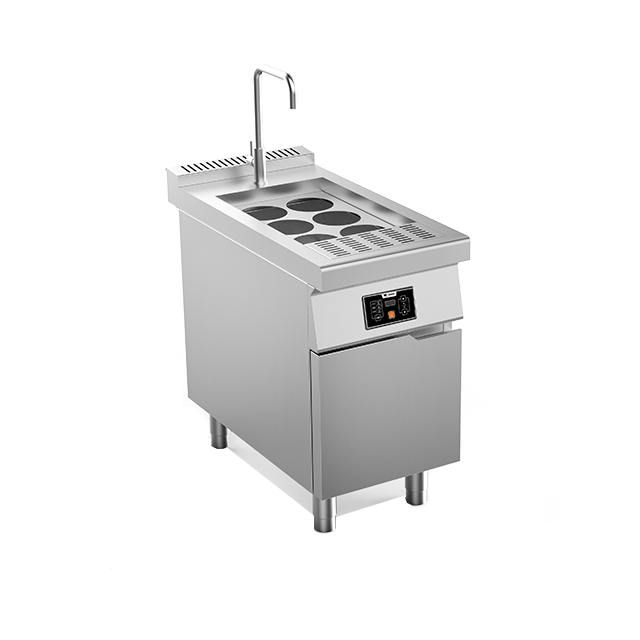
Compare the traditional BTUs of standard gas models against modern induction systems. Gas burners lose significant heat to the surrounding ambient air. Induction systems utilize direct-heat transfer technology. The electromagnetic field heats the water vessel directly. This method transfers nearly all generated energy directly into the water. Focus deeply on the recovery time. When you drop frozen ravioli into boiling water, the temperature plummets. A commercial induction pasta cooker recovers that lost heat instantly. It brings the water back to a boil seconds faster. This rapid thermal efficiency keeps your kitchen moving during intense rushes.
Detail how induction technology dramatically limits waste heat. Traditional gas burners turn commercial kitchens into unbearable saunas. Waste heat punishes your line cooks constantly. It also severely strains your HVAC system. Induction technology keeps the physical surface relatively cool. Only the cooking vessel itself gets hot. This creates a much better ergonomic environment. Cooks experience far less fatigue during demanding long shifts. Your HVAC system works less, saving substantial cooling energy.
Examine precision temperature controls for operational consistency. You need a gentle simmer for delicate tortellini. You need a fierce rolling boil for dense dry pasta. Induction controls allow exact, precise temperature dialing. You prevent rapid starch breakdown completely. You also maintain perfect water clarity throughout the service. Consistent temperatures guarantee consistent plate textures every single service.
Follow these best practices for induction boiling:
Evaluate your auto-fill mechanisms and continuous starch overflow drains. Efficient boiling requires intelligent, continuous water management. A continuous starch overflow drain automatically skims the surface. It removes foamy starch buildup without manual intervention. This keeps the water clear and prevents dangerous boil-overs. Hard water scaling presents a massive risk to equipment. Calcium deposits destroy heating elements quickly. You must install in-line water filtration systems. They mitigate scale buildup and prolong equipment lifespan considerably.
Validate your facility capacity for specialized utility hookups. Electric and induction models often require heavy three-phase electrical power. Standard standard outlets cannot power these high-throughput units. Check your main breaker panel limits immediately. Consult a licensed electrician before ordering equipment. If you prefer gas units, validate your commercial gas line constraints. Ensure proper pressure reaches the specific equipment location. Gas pressure drops will severely ruin your boiling recovery times.
Address localized compliance codes regarding extraction hoods carefully. Heavy steam-producing equipment faces strict regulatory compliance codes. Localized fire codes dictate extraction hood requirements clearly. A high-volume commercial pasta cooker produces immense moisture hourly. You typically need a Type II hood for steam extraction. This prevents ceiling mold and drywall damage. Check local municipal regulations to ensure legal and safe installation. Never bypass ventilation requirements to save installation time.
Consider these infrastructure prerequisites before installation:
Proper infrastructure planning prevents disastrous opening day failures. Always verify your utilities before placing an equipment purchase order.
Correct zone planning transforms your boiling station into an efficient engine. Consistent food quality protects your margins and satisfies guests. Streamlined kitchen operations reduce line cook stress and ticket times. You eliminate the chaos of flavor transfer and cross-contamination easily.
Take these actionable next steps today:
Upgrading your boiling station is a strategic operational imperative. Make informed decisions based on data, capacity, and actual menu diversity.
A: Capacity varies based on basket size, pasta type, and recovery time. A high-efficiency unit typically handles 60 to 80 portions per hour. Fresh pasta cooks faster, increasing overall throughput. Dry pasta requires longer boiling, reducing total hourly portions. Efficient temperature recovery speeds up this process significantly during peak services.
A: Yes, it generally requires a Type II ventilation hood. Induction units do not produce grease-laden vapors. Therefore, they rarely need a Type I fire-suppression hood. However, they generate heavy, continuous steam. Local building codes usually mandate strict moisture extraction to prevent kitchen mold and structural ceiling damage.
A: You can, but you must practice strict cross-utilization rules. Always implement frequent water cycling and distinct flavor zoning. Separate strong flavors like seafood from delicate vegetables. Use multi-tank systems to dedicate specific zones. This prevents fish oils from tainting your vegetarian dishes during busy dinner services.
A: You must flush the starch overflow drain daily. Organic starch buildup easily clogs the drainage pipes over time. Run clean, hot water through the overflow channels after every shift. Use a mild degreaser or specialized line cleaner weekly. This prevents blockages and keeps the auto-skimming feature functioning perfectly.


