


Views: 0 Author: Site Editor Publish Time: 2026-09-21 Origin: Site


A school or institutional canteen can serve hundreds of meals every day and still choose the wrong commercial rice steamer capacity. The main reason is that equipment selection is often based only on total population or machine size, while actual rice production depends on peak meal demand, portion size, cooking schedule, available batches, kitchen workflow, and future demand changes.
To plan the right capacity, schools and canteens should calculate backward from the busiest service period. The key questions are how much dry rice must be prepared, how many complete cooking cycles are possible before service, what reserve capacity is needed, and whether the kitchen infrastructure can support the selected equipment.
Quick Answer: A commercial rice steamer should be sized according to peak rice consumption, not total headcount alone. Calculate required rice volume, confirm the number of usable cooking cycles, then select equipment based on actual batch capacity, operating time, utilities, and workflow requirements.
The first step in commercial rice steamer planning is understanding real rice demand during the busiest meal period. Total enrollment, workforce size, or daily visitor numbers provide background information, but they do not directly represent cooking requirements.
A school may have many students who bring meals from home or choose other menu options. A factory canteen may have a smaller workforce but experience a very concentrated lunch rush. Therefore, equipment capacity should be calculated using actual rice consumption patterns.
The basic calculation method is:
Planning Item | Calculation Method |
|---|---|
Peak rice demand | Rice diners × dry rice portion per person |
Required production capacity | Peak rice demand × reserve factor |
Required batch size | Total rice demand ÷ available cooking cycles |
For example, if a school expects 800 students and staff members to eat rice during lunch, the kitchen should calculate the actual dry rice requirement according to the approved serving size. If rice preparation can be divided into multiple batches, the required capacity of each batch can be reduced.
This is why two kitchens serving the same number of people may require different commercial rice steamer solutions. One may need a high-capacity single batch system, while another may benefit from multiple smaller cooking cycles.
Capacity planning should always include time. A machine that appears large enough on paper may not meet demand if the kitchen cannot complete enough batches before the serving period begins.
The practical calculation is:
Available batches = Total preparation time ÷ Complete cooking cycle time
The complete cycle should include loading, heating, cooking, unloading, cleaning preparation areas, and restarting the equipment. The actual rice cooking time depends on rice type, water ratio, batch size, and operating conditions.
For school cafeterias and large canteens, the lunch period is often the most important factor. A kitchen serving meals within a short 30-minute period may require more ready-to-serve capacity than a facility with several staggered meal periods.
A cabinet-style system such as the 12-Tray Induction Steamer can support batch-based production planning. When evaluating this type of equipment, buyers should confirm the dry rice loading capacity per tray and the complete rice cooking cycle instead of relying only on tray quantity.
Different commercial kitchens have different production models. Some prefer large cabinet steaming, while others require multiple independent cooking units for flexibility.
Equipment Type | Suitable Planning Considerations |
|---|---|
Tray-based commercial rice steamer | Suitable for kitchens that organize production around trays and cabinet batches. Confirm tray loading capacity and cooking cycle. |
Two-layer electric rice cooker | Useful for kitchens needing separated cooking batches and flexible production scheduling. |
Three-layer electric rice cooker | Suitable when higher output is required while maintaining compact floor usage. |
The Two-Layer Rice Cooker provides a stacked cooking structure designed for commercial foodservice environments. Its configuration can help kitchens organize production into separate cooking units rather than depending on one large batch.
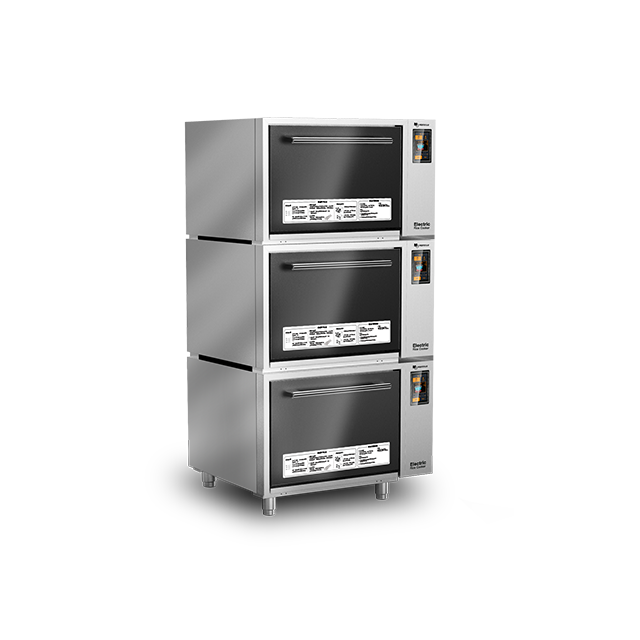
For higher output requirements, the Three-Layer Rice Cooker uses a vertical stacked structure that helps save floor space while increasing cooking levels. This type of configuration can be considered when kitchen space is limited but production demand is higher.
A larger commercial rice steamer does not always mean better performance. The kitchen must be able to support the equipment safely and efficiently.
Before final selection, buyers should review:
Available electrical power and total kitchen load
Equipment installation space
Water supply and drainage conditions
Staff movement around the cooking area
Distance between cooking equipment and serving lines
Cleaning and maintenance access
For example, a high-capacity unit may produce enough rice but create workflow problems if staff cannot easily move trays, containers, or cooked rice to the serving area.
Space planning is especially important in school and institutional kitchens because rice equipment usually operates together with other cooking systems. The total kitchen load should be considered rather than evaluating one appliance separately.
Many capacity problems come from incorrect assumptions during purchasing. Common mistakes include selecting equipment only according to the number of people served, ignoring cooking cycle time, or comparing machines only by external size.
Common Mistake | Better Planning Method |
|---|---|
Using total enrollment as rice demand | Calculate based on actual rice consumption during peak meals. |
Comparing only tray or pot numbers | Check actual rice loading capacity and cooking cycle. |
Ignoring preparation time | Calculate how many complete batches can be completed before service. |
Buying the largest available model | Balance capacity, utilities, space, labor, and operating cost. |
No backup planning | Consider reserve capacity and alternative production methods. |
Planning commercial rice steamer capacity for schools and canteens requires more than checking machine size or population numbers. The correct approach combines peak meal demand, rice consumption, cooking cycles, kitchen workflow, utility conditions, and future requirements. Shenzhen Mantru.E Commercial Equipment Manufacturing Co., Ltd. provides commercial rice cooking equipment configurations designed for different institutional kitchen production needs, allowing buyers to evaluate solutions according to their operating conditions.
Calculate the number of people eating rice during the busiest meal, multiply by the dry rice portion, then divide the total requirement by the number of cooking batches that can be completed within the available preparation time.
No. The number of people served is only one factor. Rice consumption habits, service timing, portion size, and cooking schedule are also important for accurate capacity planning.
Buyers should prepare expected meal volume, rice portion size, peak service time, available kitchen space, electrical conditions, and required production frequency.
Not necessarily. Oversized equipment may increase installation requirements and reduce flexibility. The best choice should match actual production demand and kitchen operating conditions.
Tray steamers usually organize production around cabinet trays, while layered rice cookers use stacked cooking units. The better option depends on batch size, workflow, available space, and service requirements.


